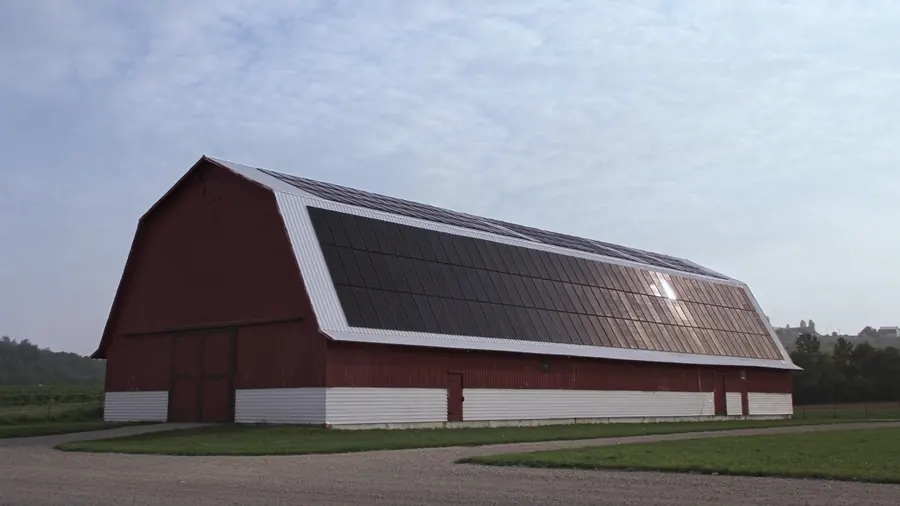
Dairy barn roof
Sample project- Location
- Wellington County
- System
- 180 kW
- Yearly output
- 207,000 kWh
- Payback
- 10.8 yrs
[ Commercial · Industrial · Agricultural ] / Hamilton & Southern Ontario
Barns, warehouses, plants and fields. We model production from your meter data, put the payback on paper, and only then talk about building.
System range
10–250 kWOutput per kW
1,150 kWh/yrMounting
Roof or ground[ 01 / Site assessment ]
Concept site: this form doesn't send anything.
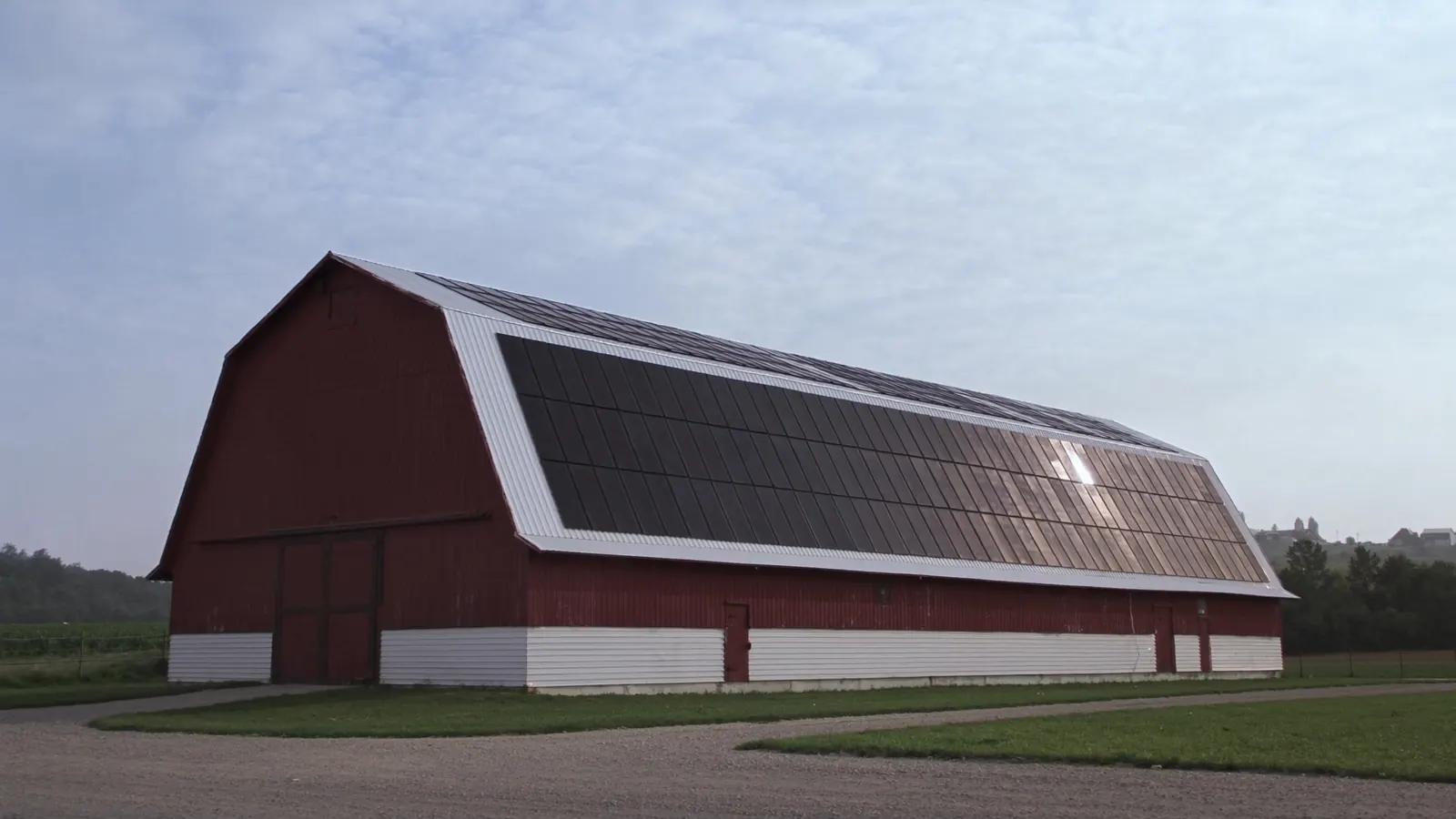
Sample projectDairy barn180 kWWellington CountyPayback 10.8 yrs
[ 01 / Sample projects ]
Sample systems to show the range. Every figure comes from the calculator below, with the same assumptions.
[ 02 / Payback ]
System size
100kW
| Cost per watt | |
|---|---|
| Installed cost | |
| Output a year | |
| Value a year | |
| Simple payback | |
| 25-year value |
[ 03 / Built for ]
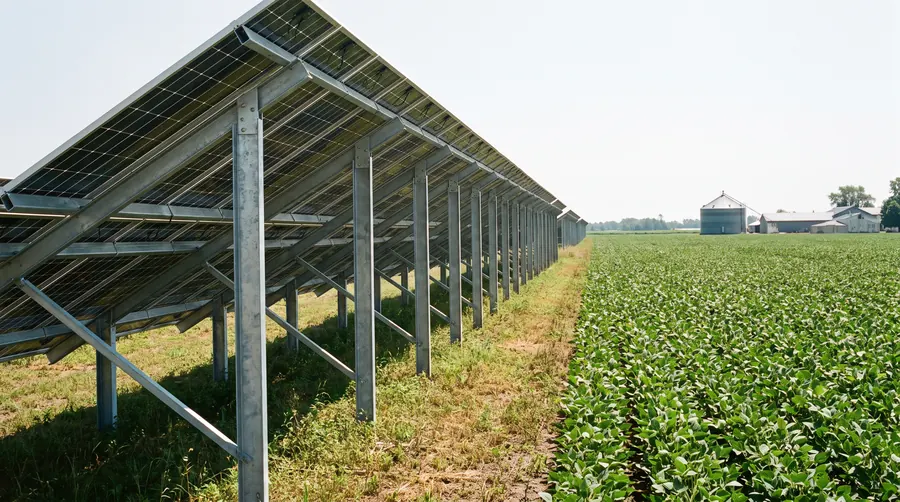
Barn roofs and spare land, sized around milking, cooling, drying and pumping loads.
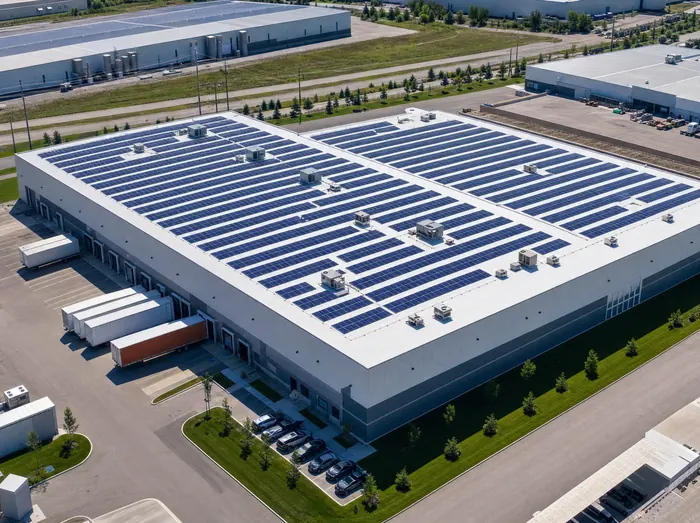
Big flat roofs with steady daytime loads, the easiest place for panels to earn back their cost.
Smaller roofs where every panel has to earn its place, with production modelled against your hours.
[ 04 / Process ]
Roof or land, the electrical room, the meter. We ask for a year of bills.
Output by month from NRCan data for your site, against your actual load.
We apply to your utility for the connection before any equipment is bought, as the net metering rules require.
Scheduled around harvest, milking or shifts. One site lead from start to finish.
Production is tracked against the model, and you get a report if it falls short.
[ 05 / Rules ]
Ontario's net metering rules cover any customer of a local utility, home or business, farms included, if the system runs on a renewable source and makes power mainly for your own use. There is no kW cap in the regulation, but your utility has to approve the connection.
O. Reg. 541/05 ↗Power you send to the grid is valued at the same per-kWh rates you pay and becomes a credit on your bill. Credits carry forward for up to 12 months, then expire. They are never paid out in cash.
ontario.ca ↗You have to apply to your utility and get approval before buying or installing equipment. We prepare and file the application.
ontario.ca ↗Save on Energy's Retrofit program lists incentives for rooftop solar that offsets a business's own use: $1,000 per kW DC up to 10 kW, then $770 per kW AC up to 1 MW, capped at 50% of project cost. We check whether your project qualifies before you count on it.
saveonenergy.ca ↗[ 06 / FAQ ]
Natural Resources Canada's survey puts commercial rooftop solar at $2.00–3.20 per watt for 10–100 kW systems and $1.90–2.40 per watt for 100–250 kW, before tax. The calculator above uses the midpoints. The site assessment gives you a written price.
Ontario's net metering rules cover any customer of a local utility, home or business, farms included, if the system runs on a renewable source and makes power mainly for your own use. There is no kW cap in the regulation, but your utility has to approve the connection.
Power you send to the grid is valued at the same per-kWh rates you pay and becomes a credit on your bill. Credits carry forward for up to 12 months, then expire. They are never paid out in cash.
We check the roof structure and its remaining life before we quote. If the roof needs work first, we say so in writing.
We plan around your operation: harvest, milking, shifts or opening hours. The electrical tie-in is the only step that needs a short planned shutdown.
[ Site assessment ]
We look at the roof or the land, your meter and your load, then send a written production model and payback before you commit to anything.
Concept site: this form doesn't send anything.